
Fencing
When is chain-link fencing the right boundary choice?
Chain link is not intended to mimic a privacy fence. It is useful when visibility, airflow and a long practical boundary matter.
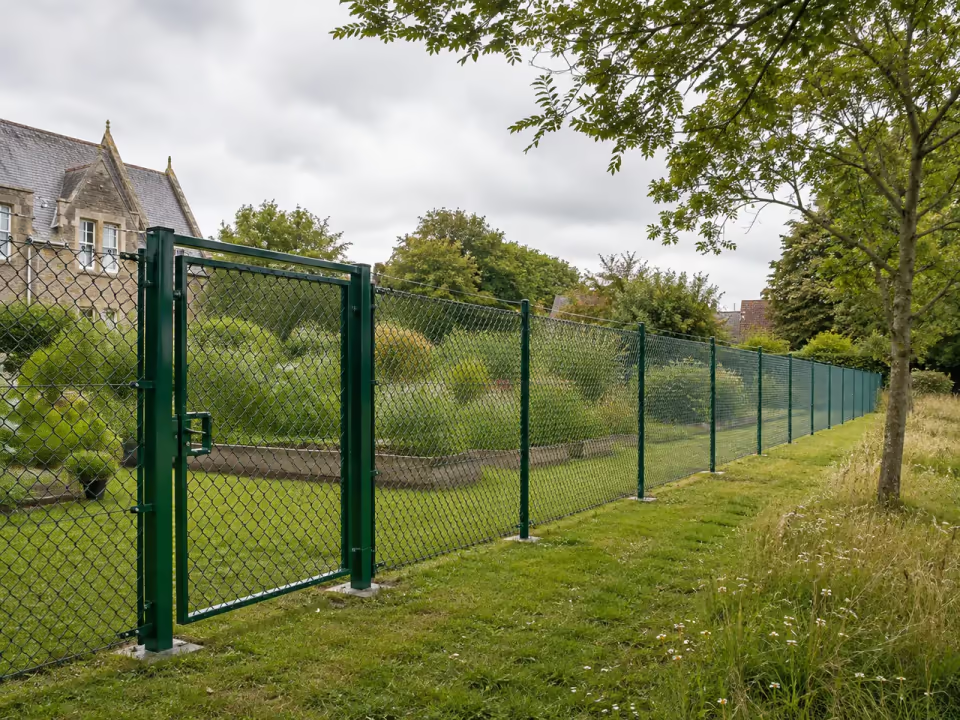
What chain link does well
Chain-link fencing creates a continuous physical boundary without the visual mass of solid boards. It can suit larger gardens, dog areas, sports or utility spaces, schools and practical dividing lines where visibility is useful.
Because wind passes through the mesh, it presents less solid surface than closeboard or panels, although posts and foundations still need to match the height and site.
Specify more than height
A proper quotation should describe the mesh and supporting system.
- Overall height and mesh opening
- Galvanised or coated wire finish
- Intermediate, corner, straining and gate posts
- Top wire, line wires and tensioning method
- Ground clearance or a lower containment detail
- Compatible pedestrian or vehicle gate
Where it may not suit the brief
Standard chain link does not provide visual privacy and can feel utilitarian beside a formal terrace. Adding screening changes the wind load and may make a different fence system more appropriate.
For dog containment, check the mesh size, ground gap and corners against the animal rather than assuming every chain-link specification is equivalent.
Installation quality is visible in the line
Tension should remain even through changes in direction and level. Corner and end posts carry different loads from intermediate posts, so treating every post the same can produce a loose or distorted finish.
A site visit identifies the length, gates, ground and intended use before the mesh and post system are selected.
Common questions
Questions this guide often raises.
01Is chain-link fencing suitable for gardens?
02Can privacy screening be attached to chain link?
03Can chain link follow sloping ground?
Related installation services
Keep planning
Related practical guides.
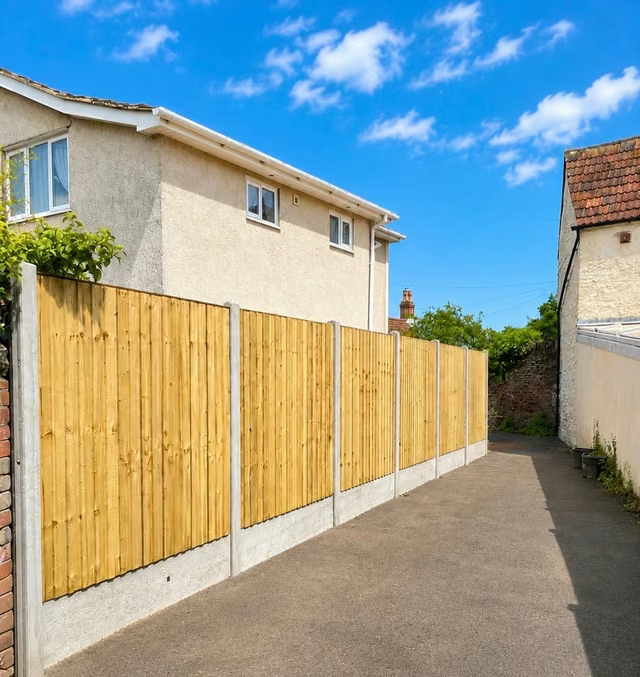
What affects the cost of new garden fencing in Bristol?
Why two boundaries of the same length can produce very different quotations—and what information helps an installer price the work accurately.
Read the guide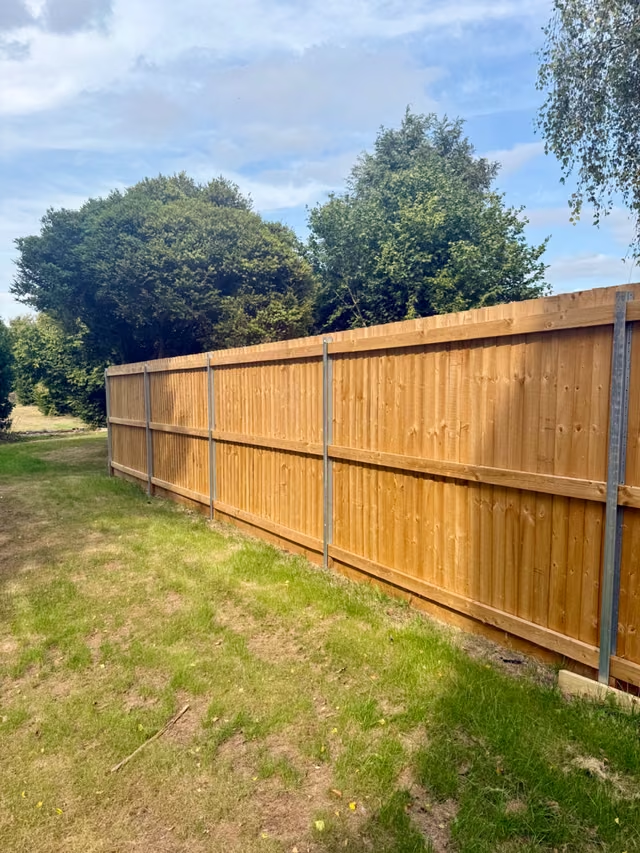
Should a damaged garden fence be repaired or replaced?
A failed panel does not always mean a complete new fence—but repeated post failures often point to a bigger problem.
Read the guide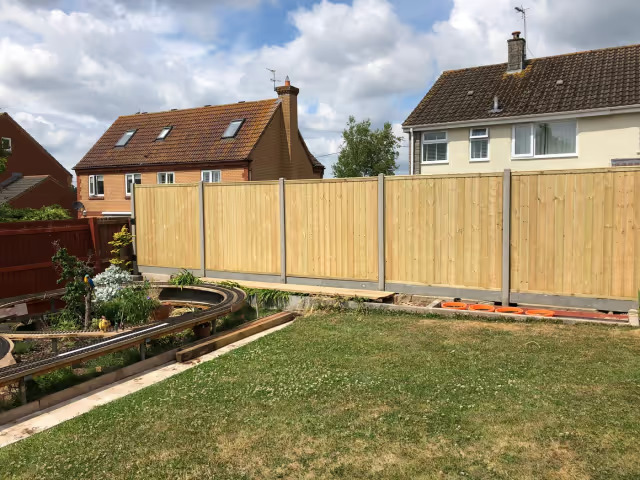
Closeboard fencing or fence panels: which is right for your garden?
Both can form a good boundary. The better option depends on levels, access, desired finish and how you want future repairs handled.
Read the guide