
Fencing
Closeboard fencing or fence panels: which is right for your garden?
Both can form a good boundary. The better option depends on levels, access, desired finish and how you want future repairs handled.
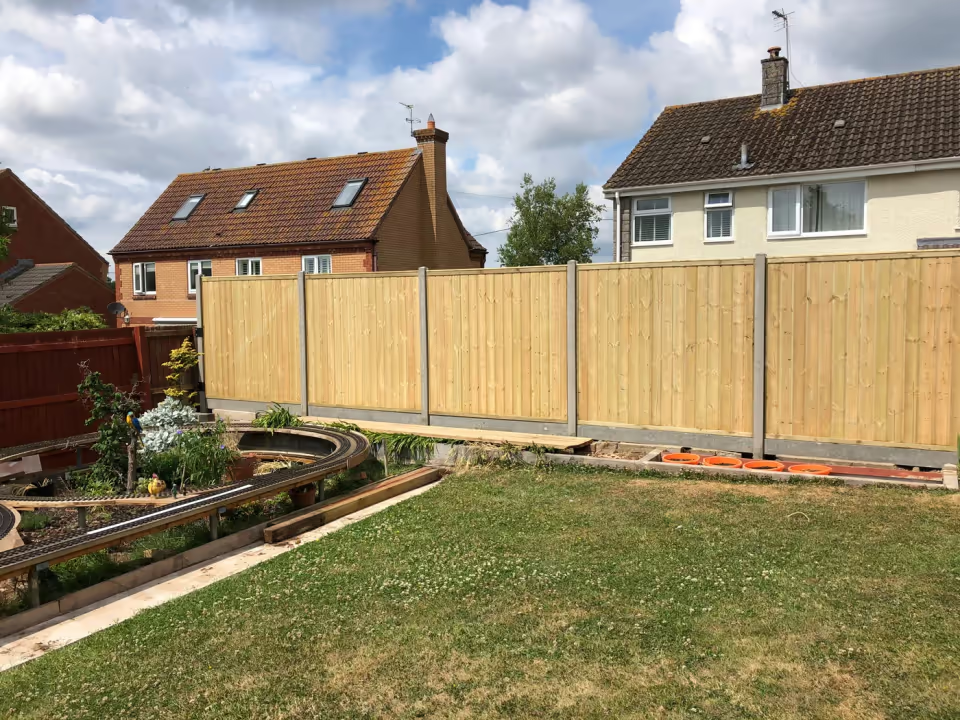
The construction difference
Pre-made panels arrive as framed sections that fit between posts. Closeboard—or feather-edge—fencing is assembled along the boundary using posts, horizontal rails and overlapping vertical boards. The finished effect can look similar from a distance, but the installation and future repair options differ.
Neither system is automatically stronger in every situation. Quality depends on the grade and thickness of components, post spacing, foundations, exposure and how well water is kept away from vulnerable timber.
Where panels work well
Panels are useful when you want regular bays, a decorative style or a straightforward replacement between compatible posts. They can make individual sections relatively quick to change later.
- Level or gently stepped boundaries
- Gardens where a particular decorative panel suits the house
- Existing concrete post-and-gravel-board systems in sound condition
- Projects where consistent factory-made bays are preferred
Where closeboard has an advantage
Because it is assembled on site, closeboard can follow a slope in smaller increments, finish neatly around corners and accommodate non-standard bay widths. Individual boards can also be replaced without removing a complete framed panel.
It is a practical choice for long boundaries and exposed sites when the full supporting structure is specified correctly. The appearance can be traditional, but capping and board treatment make a large difference to the finish.
Choose the whole system
Do not decide on the visible boards alone. Discuss timber, concrete or steel posts, gravel boards, caps, retained ground and any gate that interrupts the run. The right answer is the combination that fits the site.
A survey allows the installer to set out how levels will be stepped or followed before work begins, avoiding awkward short panels or unexpected gaps at ground level.
Common questions
Questions this guide often raises.
01Is closeboard the same as feather-edge fencing?
02Can panels be used on a sloping garden?
03Which is easier to repair?
Related installation services
Keep planning
Related practical guides.
What affects the cost of new garden fencing in Bristol?
Why two boundaries of the same length can produce very different quotations—and what information helps an installer price the work accurately.
Read the guide
Should a damaged garden fence be repaired or replaced?
A failed panel does not always mean a complete new fence—but repeated post failures often point to a bigger problem.
Read the guide
Timber posts, concrete posts or DuraPost: how do they compare?
The post system is one of the most important choices in a new fence. Here is what changes between timber, concrete and galvanised steel.
Read the guide